One weed, the Giant Rat’s Tail (GRT), was a less than welcome visitor at the Southern Queensland Correctional Centre’s 600 hectare prison grounds and needed prompt removal.
Detaining the Unwanted Visitor
As one of south-eastern Queensland’s top 25 environmental weeds and a Class 2 pest plant, the notorious and aggressive GRT has been charged with a number of ‘crimes’ including:
- Invading and degrading native and conservation areas
- Forming a grass monopoly and reducing the biodiversity of native species
- Uprooting desirable pasture species and reducing pasture productivity as it’s an unpalatable grass to livestock and native herbivores
- Lowering land value and generating high economic costs to manage the infestation
- Accelerating fire intensity in susceptible environmental areas
Both the Queensland Gatton Shire and Queensland Government expressed their concerns to the prison and declared that the GRT must be quickly removed to protect surrounding properties from the weed’s invasion.
Programmed Property Services, who maintain the prison grounds, identified an area of 100 hectares where the GRT infestation was particularly dense. Early testing using a hand spray showed that it would take 15 working days for a two man crew to spray 1 hectare. This was not a viable option as the GRT would have long overtaken the prison and caused a riot.
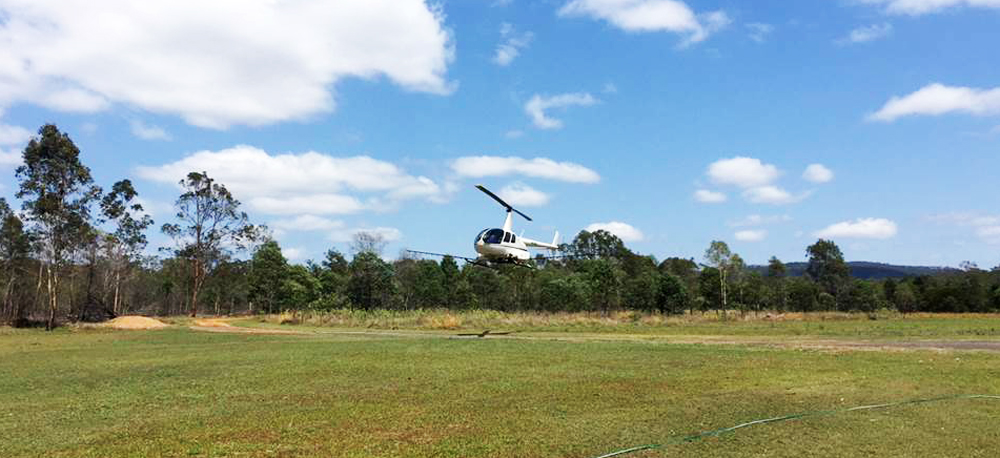
Collaborating with SEQ Aerial Agricultural Spraying, Programmed Open Space investigated other means of eradicating the noxious GRT weed and found aerial spraying via helicopter was a suitable form of application.
Executing the Plan (And the Weed)
Working closely with the prison, a detailed plan, including site risk assessment and job safety environmental analysis was created to properly mitigate associated risks.
Even the helicopter pilot was required to have - and be familiar with - the correct work method statements to perform the task safely. A flight path was also confirmed to make certain the helicopter did not trespass restriction zones over the prison.
Spraying would be done in summer when GRT actively grew for a higher chance of herbicide absorption. Despite inclement weather on the day, aerial spraying was a success. The GPS tracking system in the helicopter along with a digital map of the GRT made for very accurate and targeted spraying of the Fluproponate Herbicide.
While it can take up to 12 months for the herbicide to take full effect, signs of deterioration are already showing. The herbicide used included an element of residual treatment which prevents the weed from growing in that area for the next 5 years. The final outcome was an efficient, timely and safe application.
Protect Your Open Spaces
The successful eradication of the Giant Rat's Tail at the Southern Queensland Correctional Centre stands as a testament to what can be achieved through careful planning, expert collaboration, and innovative thinking
If your open spaces are being affected by noxious weeds, don’t delay and consult with our horticultural experts for suggestions to eliminate and prevent weeds from spreading.