Research shows a child’s development can be influenced by where they play and how they play. Natural environments can encourage imaginative play, evoking a sense of adventure and the interaction with nature.
Studies into outdoor and nature-based play consistently link it to a wide range of developmental benefits. Children who play in natural, varied environments tend to show improved physical activity levels, stronger social interaction, greater creativity and resilience.
Researchers have also found that the freedom to take manageable risks outdoors helps children build critical risk-assessment skills and supports their mental wellbeing, at a time when opportunities for unstructured, independent outdoor play have declined significantly compared to previous generations.
Green, natural spaces in particular have been shown to encourage children to interact more cooperatively, using more language and creativity than they do indoors or on conventional equipment-based playgrounds.
What is a Natural Playscape?
A natural playscape is an alternative to that of a conventional playground area. It contains natural elements, such as:
- Eucalyptus logs for seating – rather than manufactured benches, natural timber logs double as seating, balancing beams, and informal stepping paths, encouraging gross motor skill development as children navigate uneven surfaces.
- Pebble dry creek beds planted with soft textured native grasses – these mimic natural watercourses and can also assist with stormwater management and drainage on site, while giving children a sensory-rich landscape feature to explore.
- Local indigenous plants that stimulate the senses – species chosen for scent, texture, colour and sound (such as rustling foliage in the wind) provide sensory stimulation that supports early childhood development.
- Contrasting textured foliage to attract native fauna – layered planting of groundcovers, shrubs and small trees creates habitat for birds, butterflies, lizards and insects, turning the playscape into a living outdoor classroom for observing local wildlife.
- Bush tucker plants – these are a wonderful way to teach children how diverse our plant kingdom is, such as the Backhousia citriodora (Lemon Myrtle) and other native food and medicine plants traditionally used by Aboriginal communities. Lemon Myrtle, for example, is native to the subtropical rainforests of coastal Queensland and northern New South Wales and is prized for the strong lemon scent of its crushed leaves, making it a favourite for sensory gardens as well as bush tucker education.
- Loose parts – including twigs, hessian cloth, wood offcuts, seed pods, and other loose natural elements that enable children to create and construct their own play space. This concept, known as "loose parts play," is grounded in the idea that open-ended materials with no fixed use encourage far greater creativity and problem-solving than single-purpose play equipment, because children decide for themselves what the materials become.
Why Schools and Communities Are Making the Switch
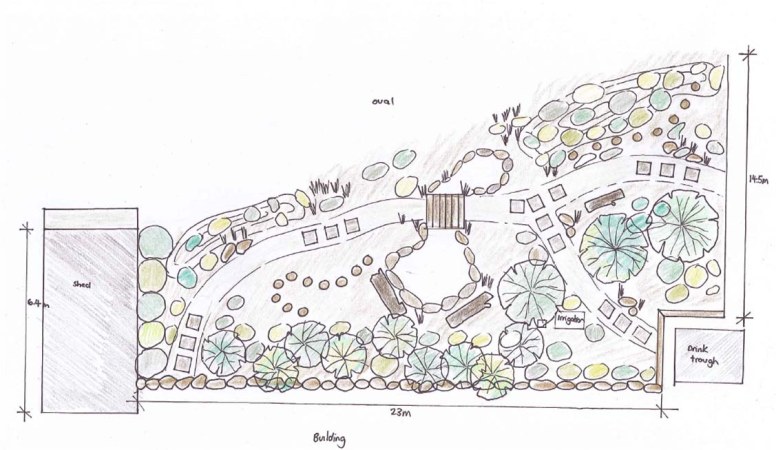
Just recently, the South Australian landscaping team has designed a natural playscape for Unley Primary School located in the inner eastern suburbs of Adelaide. The design incorporates a meandering gravel path with a foot bridge made from recycled hardwood, naturally placed rocks and logs for climbing, and plants that are native to the local district.
This kind of design reflects a broader shift happening across South Australian schools, where natural playscapes are increasingly being chosen as part of new builds and playground upgrades, both for their developmental value and their lower environmental footprint compared with traditional synthetic play surfaces.
Ready to Transform Your School or Community Space?
If you're considering a natural playscape for your school, childcare centre, or community space, our landscaping team can help bring the concept to life — from initial concept design through to planting, hardscaping, and installation of natural play elements like logs, boulders, and bridges. We offer ongoing open space maintenance services to keep your playscape thriving long after installation.
Get in touch with our team today to discuss your site and start planning a play space that supports imaginative, nature-connected play for years to come.