The loss of trees also means the loss of tree hollows (cavities formed in the trunk or branches of a living or dead tree), which are home to at least 300 types of Australian animals, including 17% of bird species, 42% of mammals and 28% of reptiles.
The Hollowhog is a unique wood carving tool (designed and manufactured in Australia) specifically designed to create a habitat for hollow-dependent wildlife. The Hollowhog efficiently and safely creates large internal cavities through small entry holes in both living and dead wood. No other damage to the tree’s cambium (living tissue) occurs through the carving process, meaning there is little disruption to a tree’s growth.
The Hollowhog pictured above creates a 50 mm entry hole and then progressively carves a larger hollow of dimensions up to about 600mm wide and long by 600mm deep. The hollow shape can be easily adapted to the size and shape of the tree limb or trunk in which it is being carved.
Always at the forefront of doing things differently, the HollowHog initiative is being used by Gecko and our Facility Management Team to create habitat trees. It has been adopted by Sydney Water’s Partnering for Success (P4S) initiative and is already being used in the West Region and, more recently, at Quakers Hill Sewage Treatment Plant.
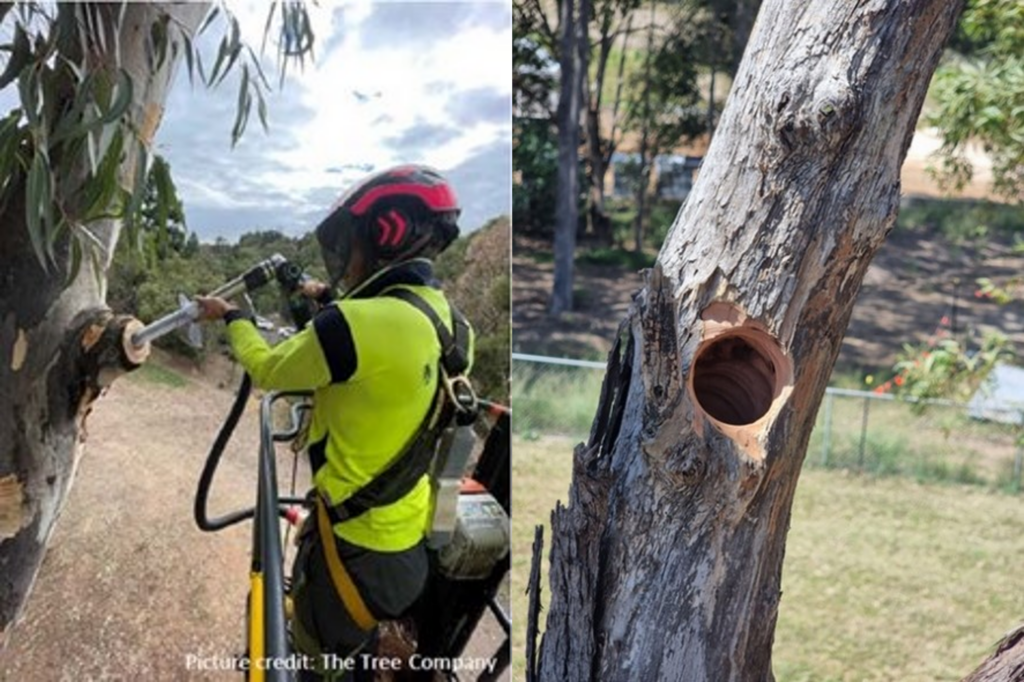
The team have left the tree as a totem pole and hollowed out limbs to allow for habitat.