Updated 29 June 2026
Industrial and commercial facilities are long-term assets exposed to severe weather, pollutants, physical wear, and vandalism. Standard decorative painting rarely provides adequate long-term protection for these investments.
To maintain structural integrity and avoid costly repairs, operations managers use advanced engineering materials, such as professional protective coatings.
Importance of Professional Protective Coatings
Whether your property requires basic roller application or complex access methods, a professional coating approach can extend its lifespan and address deterioration.
Assessing each substrate and elevation ensures your facility receives the appropriate protection, supporting durability and easy maintenance even in harsh conditions and under graffiti threats.
Core Components of a Quality Coating Process
A quality professional protective coating application process should include:
- Substrate Preparation: Comprehensive preparation, including high-pressure cleaning.
- Hazard Mitigation: Removal and isolation of lead, asbestos, and rust.
- Specialist Formulas: Expert application of epoxy, polyurethane, and anti-corrosion coatings.
- Material Compatibility: Suitable applications for various façade, steel, and cladding materials.
- Safety and Climate Control: Fire protection and temperature-control applications.
Standards, Safety, and Compliance
In addition to a specific plan and application process, the work should be carried out by trained and experienced painters and checked by accredited inspectors to ensure both the application and the outcome meet the required standards for protection and safety.
Environmental and Specialised Requirements
Particularly where food and manufacturing facilities are concerned, this should further entail the latest industry practices for environmentally friendly applications and the achievement of dust-free surfaces. This is also true of work in confined spaces, such as within water tanks, and at heights, so you can be certain the work will be completed safely with expert knowledge.
Case Studies and Success Stories
Programmed has successfully carried out painting work using specialist protective coatings for many customers, meeting their unique requirements.
BlueScope Steel / Fluor (NSW, Australia)
The bridge connecting Bluescope’s operating plant in Port Kembla to the main harbour had failing paintwork containing lead, allowing rust to develop. The bridge was stripped of all existing coatings, appropriately treated, and repainted with specialist protective coatings to reduce the future development of rust and degradation. The project won the Master Painters Awards for Excellence in the Environmental Management category.
Fulton Hogan (Auckland, New Zealand)
Fulton Hogan works with large volumes of aggregates and bitumen, creating an abrasive environment for buildings and equipment at the facility. A long-term maintenance programme enables Fulton Hogan assets to withstand the rigorous work environment and maintain a clean, well-kept site. Given the nature of the surroundings, a protective coating, along with specialised access equipment, plays a key role in the facility’s ongoing paint maintenance.
Campbell’s Soup (VIC, Australia)
Meanwhile, at Campbell’s, protecting their larger-than-life heritage-listed water tank, which incidentally replicates the proportions of an actual Campbell’s Soup can, is vital.
Non-abrasive blasting and specialist protective coating, particularly on the inside of the still-in-use water tank, alongside a carefully implemented safety plan while paint restoration works were ongoing, have been key to Programmed’s ability to assist Campbell’s in maintaining the tank’s operational functionality.
MCG Light Towers (VIC, Australia)
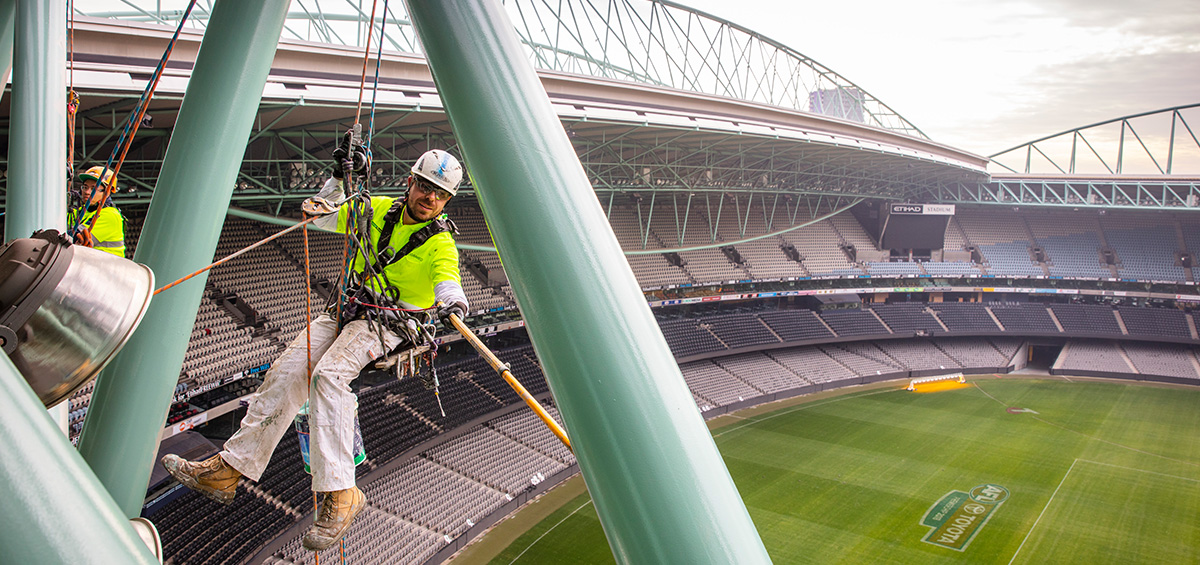
Similarly, at Victoria’s iconic MCG, conservation of its six iconic light towers is paramount. Testing Melbourne weather and a busy sporting schedule that keeps it in the constant limelight mean the light towers require ongoing functionality and presentation from both aesthetic and operational perspectives.
To maintain these instantly recognisable landmarks against wind, rain and the glaring sun, a combination of highly skilled painters and specialised coatings is necessary. These also provide protection against dirt and rust, and are part and parcel of its long-term preventative maintenance programme.
Deane Apparel (Auckland, New Zealand)
Specialist protective coating is not restricted to painted surfaces, but also extends to signage assets. For Deane Apparel in Auckland, New Zealand, Programmed’s expertise ensured that painting, signage, and substrate repair work delivered a high-quality outcome with better architectural paint coverage and the right level of gloss, including an anti-graffiti finish.
Partner with Programmed for Professional Protective Coating Services
Managing complex infrastructure requires balancing long-term material protection, strict safety guidelines, and minimal operational downtime. As demonstrated across major industrial and cultural landmarks such as the MCG and BlueScope Steel, protecting heavy-duty substrates requires an integrated approach that includes thorough risk mitigation and compliance with rigorous engineering standards.
At Programmed Commercial Painting, we deliver comprehensive asset protection tailored to the unique environmental conditions of your region and industry. Backed by certified coating inspectors and highly trained height and confined-space professionals, we implement long-term preventative maintenance programmes that extend asset lifespans while keeping your facilities operational and compliant.
Be it maintenance or renovation, speak to us to start protecting your assets today. Contact us to request an obligation-free quote.